Affiliate links on Android Authority may earn us a commission.Learn more.
The POCO X2 isn’t the POCOphone you’ve been waiting for (and that’s okay)
June 08, 2025
With the POCOphone F1, the Xiaomi managed to strike an unbelievable price to performance ratio for its time. Top-tier internals for ~$300? Sign me up!
That said, it’s been a while since the launch of the POCOphone F1 (or the POCO F1 in India) and users have been hankering for an updated release. So color us surprised when we learned that the nextPocophone wouldn’t be quite the successor everyone had been hoping for. ThePOCO X2from thenow independent POCO brandlacks the flagship internals that made the original so enticing.

The X2 cribs the design from the already launchedRedmi K30, though given that this is an India-only launch for now, perhaps it isn’t as big of a deal. Mostly though, the phone simply lacks the uniqueness that set the POCO F1 apart from the broader Xiaomi portfolio.
And while thepricing is good, the POCO X2 remains within spitting distance of the competition. realme, for one, has shownmassive gains in market sharewithin its first year on the market. With a wide spectrum of devices that traverse price-ranges, the company has something for everyone. Interestingly, the POCO X2 now competes against Xiaomi’s phones as well. For a brand that was built to be entirely disruptive, the X2 is a rather lukewarm comeback phone.

The POCO X2 arrives in a drastically different smartphone landscape where the competition has not just wisened up, but is actively following the very strategy that madeXiaomiand by-extension, POCO, successful. WhileXiaomi’s market shareis holding strong at 26%, others are catching up. realme’s business grew sixfold year-on-year from 2018 to 2019 to reach a 16% market share, while vivo too has managed to grab 20% of the market almost entirely on the basis of its mid-range hardware.
POCO has certainly tried to differentiate the X2 with a 120Hz screen. Is that enough? I don’t think so. Between the iffy implementation where the UI doesn’t always match up to the refresh rate, as well as lacking support from games to make use of that new-fangled screen, there is little incentive to pick up the POCO X2 purely for itshigh refresh rate display.

However, to understand the positioning of the X2, it is important to shift the spotlight a bit. The X2 isn’t a replacement for the F1, in fact, it complements the lineup.
The realities of the smartphone market have changed quite a bit since the F1 launched in 2018.5Gis here and 5G-enabled flagship chipsets like theSnapdragon 865are an order of magnitude more expensive than the previous generation. A huge chunk of a phone’s cost is the sum total of the parts that go in it and that alone dictates that any futurePOCO F2would likely not be able to hit the disruptive price point the original had.

Speaking toAndroid Authority, Manmohan Chandolu, General Manager at POCO India said:
This reaffirms our view that a new POCOphone with a current-gen 800-series chipset simplywasn’t feasible right now. Add to the fact that Qualcomm no longer makes a Snapdragon 845, the company’s only option was a 700-series chipset. Moreover, by adding a lower-priced option, POCO leaves itself some wiggle room to launch a higher-end phone that slots in neatly in the $300-$400 price segment.
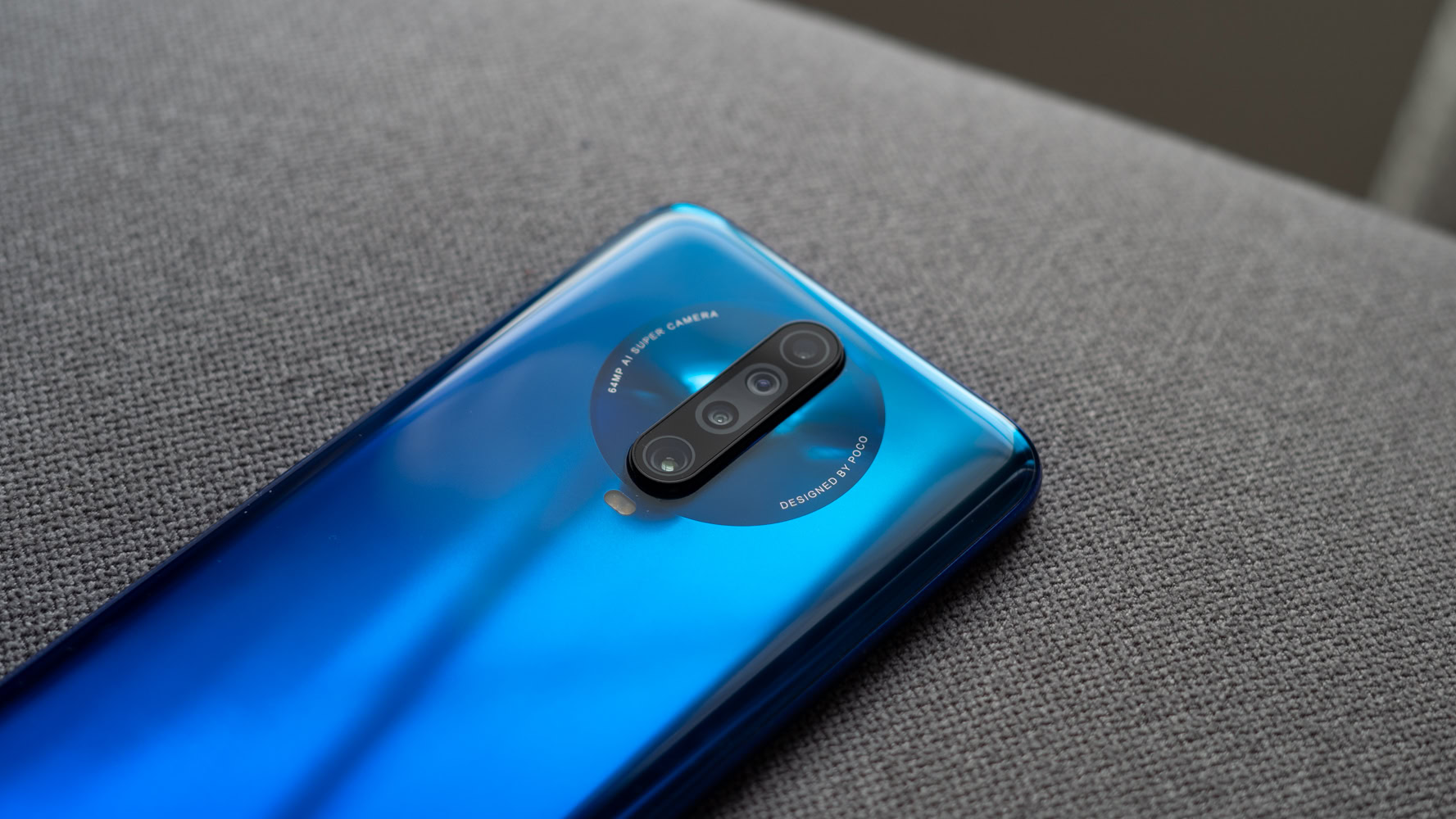
Mid-segment chipsets have truly matured in the last few years. Benchmarks scores aside, the performance differential between a700-series Snapdragon chipsetand one from the 800-series is no longer as drastic as you’d imagine it to be. The POCO X2 is perfectly capable of maxing out any game you throw at it and given the glacial pace of developments in the smartphone gaming world, it should be able to keep up even a year or two down the line. We’ve previouslytalked in depthabout the strides being taken by mid-range hardware. A mid-range chipset from today is often rivaling flagship options from just a year or two ago!
Community and support trumps affordable hardware
In our conversations with POCO, it quickly became apparent that the company wants to shift focus from a hardware-driven approach towards software and support. POCO claims that it will deliver long term support for the phone, and if the F1 is anything to go by, this should likely be true. The POCO F1 continues to receive monthly software updates with the latest bringingAndroid 10-based MIUI as well as the January 2020 security patches.
POCO is embracing community development with the X2. Chandolu went on to say that several current features on the phone were inspired by or drew on changes implemented by community developers. By embracing the enthusiast audience, the X2 picks up on the same audience thatOnePlusbuilt its base on years ago. The fact that the company will honor warranty even if you a brick a device while flashing a custom ROM is a clear indication of the enthusiast-centric direction that POCO is headed.
The POCO X2 lives up to its brand promise established with the POCOphone F1 of offering all the essentials and none of the fluff. Will the X2 appeal to fans of the F1? Absolutely not. If it is speed you need, the F1 still outpaces the X2. However, by opening itself to a new market, the X2 gives it more legitimacy and visibility and that can only be a good thing. As the smartphone market in India shifts up the price ladder, a $250 phone hits the sweet spot for a large demographic.
A future POCO F2 will likely be much more expensive
There is little to no doubt that there will be a successor to the POCO F1. With the company ramping down production on the original, it is leaving a gaping hole and unfulfilled demand in the $300-$400 price segment. It remains to be seen how POCO fulfills this. Sure, it could go the 5G route and launch the POCO F2 with a Snapdragon 865 chipset. That phone will, however, be invariably priced in the $400+ price segment at a minimum. For a product line that is predominantly India-focused where 5G remains a pipe-dream, this doesn’t make much sense.
Additionally, there are considerations to be made for a Snapdragon 855-enabled phone instead. The closest competitor for a future POCO F2 would be therealme X2 Pro— a phone that is priced at Rs. 29,999 (~$420) or a steep $140 premium over the POCO F1.
Between Chandolu’s inhibitions around launching 5G phones until the infrastructure is in place, and the sheer economics of a high-end chipset, it is clear that POCO will struggle with matching the POCO F1’s price. Therein lies our other concern. The POCO F1’s appeal centered around it undercutting the competition by hundreds of dollars. This time around, value-segment competition with flagship hardware is already setting benchmarks for pricing, and it is very clear that fans might be in for a bit of a sticker shock.
Where does that leave us with the POCO X2?
Fan expectations and demands aside, there is little wrong with the POCO X2. In fact, it is a near-perfect mid-range phone that shies away from experimentation or pushing boundaries. Does it make it a bit generic? Sure.
However, it is perfectly positioned to give the brand a foot in thesub-$300 market, while also leaving space for experimentation with a higher-end device.
Realistically, a POCO F2 likely isn’t feasible at the moment. Certainly not at the price point that would please F1 fans. The POCO X2 does its job of building brand awareness, while also offering the essence of what the brand stands for at a lower price point, and that’s perfectly okay.
Thank you for being part of our community. Read ourComment Policybefore posting.
